Small Tree Warnings Are Easy to Miss
A tree rarely fails without a hint. Like a slow drip under a sink, it gives small signals long before the big mess. If this is your first time dealing with a tree that worries you, you are in good company, and you do not need to know any jargon.
Mointeresting Tree Service is a referral service. We connect homeowners in Talmo and across the Talmo area with independent local tree removal providers. The providers do the cutting, hauling, and stump work. We help you reach them and ask for an estimate with no obligation.
Here are a few early signs worth a second look:
- Dead branches at the top, or leaves that drop in the middle of summer
- Cracks, hollow spots, or mushrooms near the base
- A lean that looks new, or soil lifting on one side
- Limbs hanging over a roof, a wire, or a bedroom window
Catching these early often means a calmer, simpler job. Waiting for the next thunderstorm usually does not.
Prefer to talk it through? Request a callback to check provider availability in your part of the area.
How It Works
A front desk, not a crew
Think of Mointeresting Tree Service as the front desk at a clinic. The desk does not treat you. It points you to the right specialist and gets things started. In the same way, Mointeresting Tree Service does not cut, climb, or haul. Independent local providers in our network do that work. Each one runs its own business, sets its own prices, and keeps its own schedule.
How a request moves along
Step one: describe what you see
Tell us where the tree stands, how big it looks, and what worries you. Photos help if you have them, but they are not required.
Step two: a provider reaches out
A local provider reviews your details and gets in touch to talk about a visit. Many providers can respond quickly, but availability depends on the season and the weather.
Step three: compare in writing
The provider looks at the tree, explains the options, and gives a written quote. You decide what happens next. There is no obligation to hire anyone you speak with.
What providers in our network can handle
Providers commonly offer residential tree removal, stump grinding, tree falling service for trees that must come down in sections near a house, and emergency tree removal after storms. Not every provider offers every service, so mention what you need when you ask.
A plain note on roles
Mointeresting Tree Service has no crews and no trucks. Ask each provider about its own licensing and insurance, and get the details in writing before any work begins.
Where Local Providers Help
Mointeresting Tree Service focuses on homeowners in Talmo and across the Talmo area. The weather here shapes tree trouble in clear ways. Hot, humid summers feed fast growth and also fungus. Thunderstorms and the leftovers of tropical systems soak the ground, so heavy trees can tip when the soil turns soft. An occasional ice storm adds weight to every limb.
Think of the roots as a second tree hiding underground. When that hidden half struggles, the top half often shows it later.
Homes vary too. Older mill-era houses often sit beside large, mature trees planted decades ago, close to walls and porches. Newer subdivisions may have young trees planted tight to a foundation, where they can crowd crawl-space vents or slab edges as they grow. Brick and vinyl siding both scrape and stain when limbs rub them in the wind.
Providers in our network know these local patterns and can explain what they see on your lot.
Wherever you live in the service area, you can ask about availability for a visit.
A First-Timer's Guide to Trees
Early signs, explained
Trees talk in small ways. Think of a dental checkup: a small cavity is simple to treat, and a big one is not. Walk your yard twice a year and look up, look down, and look at the base.
Signs in the crown
Dead branches, thin leaves during the growing season, or bark peeling in sheets can mean the tree is struggling inside. Leaves that turn early or never open are worth noting.
Signs at the base
Mushrooms, soft or hollow wood, and cracks near the soil line suggest decay. Soil that lifts or splits on one side after a storm can mean roots are loosening.
What a first visit looks like
A provider walks the property, checks the tree and what it could hit, and explains your choices. Some trees can be cut from the ground. Others need climbing or a lift. Expect questions about fences, wires, and access.
Typical costs
In the U.S., removing a tree often runs from a few hundred dollars for a small one to several thousand for a large or tricky one. Stump grinding commonly adds a separate, smaller charge. Prices vary by job, so get a written quote.
Stump grinding
After a tree comes down, the stump stays behind and the roots keep sending up shoots. Stump grinding chips the wood below ground level so you can plant grass or build over it. Ask whether cleanup and haul-away are part of the quote.
Emergency tree removal
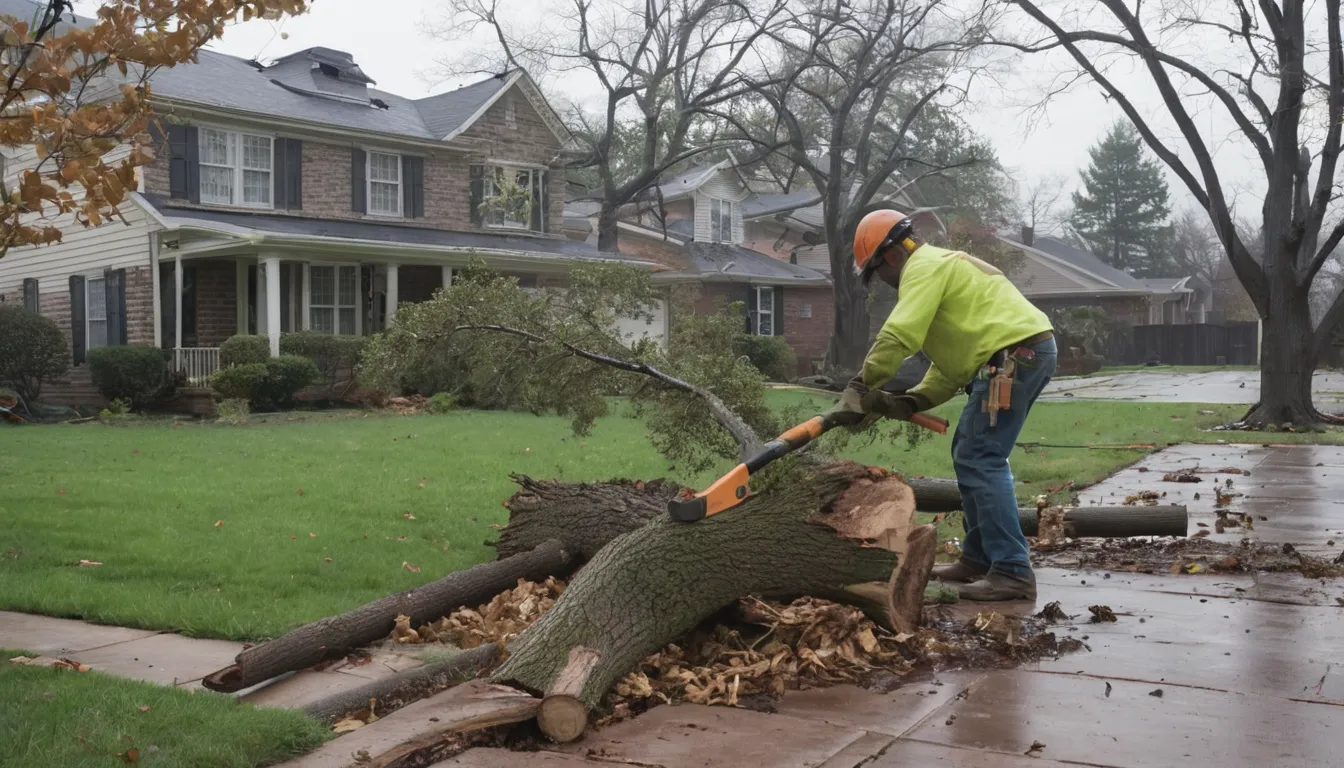
If a tree lands on a house or blocks a driveway, keep people away and stay clear of any wires. Request a callback to check provider availability for emergency tree removal. After a big storm, demand for storm tree clearance rises, so waits can vary.
Insurance and paperwork
Some policies may cover sudden damage from a fallen tree, so check your policy. Providers can often help document damage for a claim.
Ask About Your Tree
Ready to take the first step? Send a short note about your tree, where it stands, and what worries you. A local provider can review it and reach out about a visit.
You can also email contact@mointeresting.property with photos or questions. Prefer to talk? Request a callback to check provider availability. There is no obligation, and you choose whether to hire anyone.